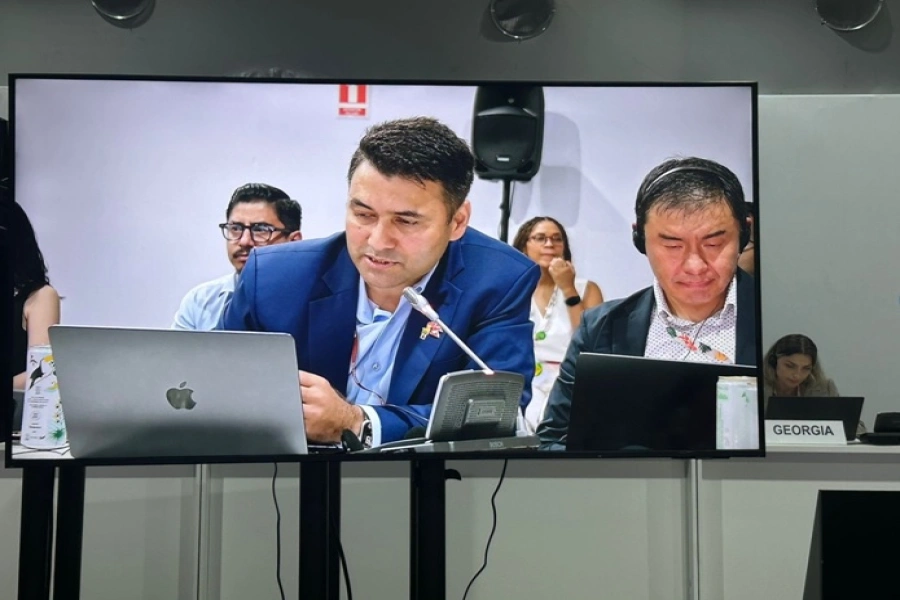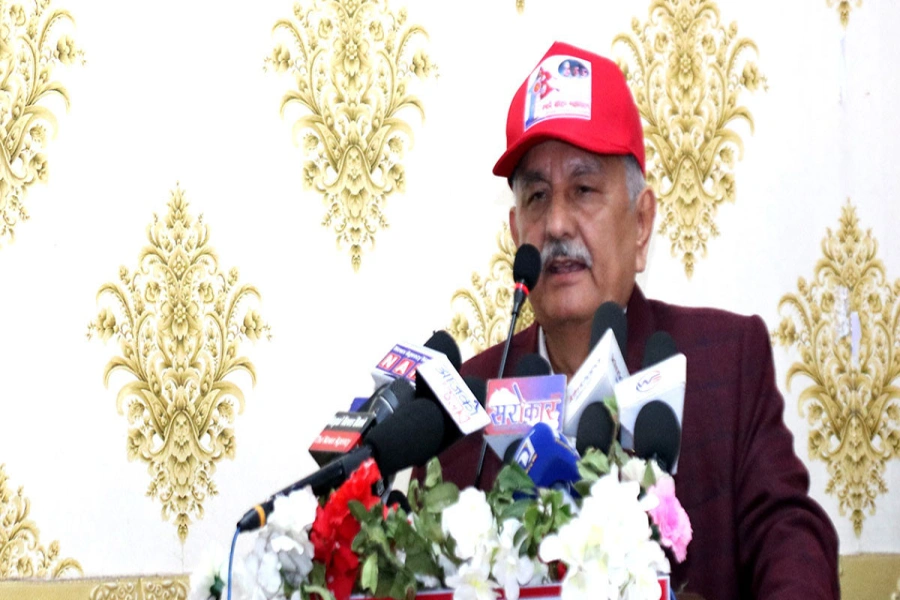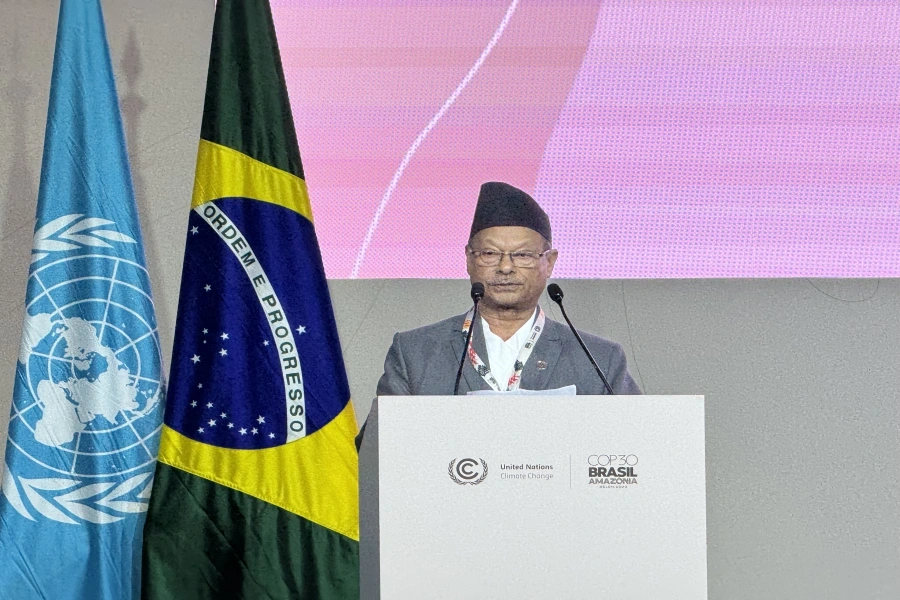
Nepal arrived in Belém this year carrying the weight of Himalayan concerns. The melting Himalayas pose a risk that will affect more than two billion people across South Asia who depend on mountain ecosystems and glaciers. At COP30, Nepal’s negotiators represented more than their small nation—they spoke for a global water tower and a frontline of the climate emergency. The Head of the Nepali delegation, Dr Madan Prasad Pariyar, Minister for Agriculture and Livestock Development, delivered a compelling national statement in the high-level segment, calling on the international community for climate justice.
Nepal’s position was clear: it contributes almost nothing to global emissions yet suffers some of the harshest impacts of climate change. According to the Climate Risk Index, Nepal ranks 10th globally among the countries most affected by past climate hazards. The climate crisis is no longer a future threat; it is already here. Floods, GLOFs, droughts, and other climate-induced disasters have become more severe, affecting millions—particularly farmers and marginalized communities. In the last two years alone, climate disasters have claimed over 500 Nepali lives, with more than 300 deaths reported this year due to droughts, unseasonal floods, and landslides. Rapid glacier melt continues to heighten the threat of GLOFs and landslides, endangering downstream communities.
The delegation underscored a central injustice: Nepal bears disproportionate losses despite contributing negligibly to the world’s carbon burden. At COP30, Nepal reiterated that climate finance must be fair, accessible, and targeted to those who suffer the impacts they did not cause.
Operationalizing Loss and Damage
A major focus of Nepal’s diplomacy was securing predictable, rapid, and accessible support for unavoidable climate impacts. Nepal called for the full operationalization of the Fund for Responding to Loss and Damage (FRLD), which represents a lifeline for highly vulnerable countries that emit the least but suffer the most.
During a bilateral meeting with Ibrahima Cheikh Diong, Executive Director of the FRLD, Nepal requested recognition as one of the most vulnerable countries and welcomed the launch of the Barbados Implementation Modalities (BIM). Nepal is preparing a proposal for the BIM start-up phase, which is significant as the framework allocates at least 50% of its resources to SIDS and LDCs.
Looking ahead, Nepal expressed its willingness to host the FRLD Board meeting in Kathmandu in 2027. Nepal also urged parties to consider the Advisory Opinion of the International Court of Justice to advance global climate justice for frontline nations.
Call for Simplified and Predictable Climate Finance
SHIFT for Our Planet: Youths urge authorities to make climate j...

During the High-Level Ministerial Dialogue on Climate Finance, Nepal demanded the fulfillment of past commitments and the delivery of climate finance to the most vulnerable. Nepal reiterated the global call to triple adaptation finance—reaching at least USD 120 billion per year by 2030—and insisted that at least 80% of such financing should reach local communities, where climate impacts are most severe.
Nepal argued that promised funds lose meaning if tied up in complex procedures. The delegation urged that climate finance must be simplified, transparent, and grant-based, especially for countries in vulnerable situations. Nepal stressed the urgency of operationalizing the New Collective Quantified Goal (NCQG) with a clear pathway to mobilize USD 300 billion annually within the broader USD 1.3 trillion roadmap agreed in Baku. Multilateral funds such as the GCF, GEF, and the Adaptation Fund were urged to streamline procedures and shorten long accreditation pipelines
High Ambition, Transition Challenges, and Local Action
Despite limited resources, Nepal showcased strong national ambition. The government has adopted an action-oriented National Adaptation Plan (NAP), submitted its third Nationally Determined Contribution (NDC 3.0), and aims to achieve Net Zero by 2045—placing it ahead of many wealthier countries.
Nepal’s remarkable forest cover of more than 46% highlights its long-standing commitment to nature. Locally led, ecosystem-based, and nature-based solutions remain central to Nepal’s resilience strategy, creating green jobs and supporting youth innovation.
However, ambition does not negate vulnerability. Climate change threatens Nepal’s food system, as agriculture remains the backbone of its economy and is highly sensitive to shifting rainfall patterns and droughts. Nepal emphasized the need for predictable, grant-based climate finance to protect food security and rural livelihoods.
As Nepal prepares to graduate from its Least Developed Country (LDC) status, it stressed that development progress does not reduce climate vulnerability. Continued targeted support remains crucial during this transition.
The Diplomatic Push: Institutionalizing the Mountain Agenda
One of Nepal’s strongest interventions at Belém called for urgent global attention to mountain ecosystems. Dr Maheshwar Dhakal, Senior Joint Secretary and alternate member of the Loss and Damage Fund from the LDC Group, highlighted that climate impacts on glaciers, GLOFs, and mountain ecosystems have long been overlooked.
Recognizing Mountains as Global Water Towers
The Himalayas, often described as the “water towers of Asia,” sustain nearly two billion people through freshwater, biodiversity, and ecosystem services. Protecting these fragile systems is a global responsibility. Nepal urged that mountain ecosystems be explicitly recognized within the Global Goal on Adaptation (GGA) indicators and monitoring frameworks.
Nepal also highlighted the Sagarmatha Call for Action, which advocates for a dedicated fund for mountain resilience and stresses the importance of strengthening climate information and early warning systems.
The Sagarmatha to Belém Initiative
To advance the mountain agenda, Nepal hosted the high-level side event “Sagarmatha to Belém: Advancing Mountain Climate Action.” Bhutan, Kyrgyzstan, Bangladesh, Pakistan, Andorra, France, Malawi, Austria, and Armenia participated. Discussions centred on mountain-specific indicators, stronger alliances, and predictable financing for long-term solutions.
The Push for Annual Dialogue
Nepal coordinated with other mountainous countries—including Kyrgyzstan, Bhutan, Peru, and Armenia—to propose a draft decision text to institutionalize the mountain agenda within the UNFCCC. This effort resulted in a request from the COP30 Presidency to establish an annual dialogue on mountains and climate change, to be convened during SB64 in June 2026.
Nepal specifically proposed a joint agenda item under SBI and SBSTA titled “Mountains and Climate Change” to track progress and challenges in mountain regions—a long-awaited step for mountain nations.
Global Solidarity and Partnership
Throughout COP30, Nepal championed multilateralism and solidarity. In joint statements with Bangladesh and Bhutan, Nepal reaffirmed the 1.5°C goal as a matter of survival and urged accelerated NDC implementation. They emphasized that LDC graduation does not reduce climate vulnerability and called for expanded access to specialized climate finance such as the LDCF.
Nepal is also working with Bhutan, Kyrgyzstan, and other LLDCs to formalize a negotiating bloc for landlocked developing countries under the UNFCCC.
Nepal stressed inclusive climate action, highlighting the role of youth, women, indigenous communities, civil society, and the private sector. Before COP30, Dr Madan Prasad Pariyar received the National Youth Statement developed by more than 500 children and young people calling for urgent, equitable climate action.
In summary, Nepal’s delegation demonstrated strong leadership at COP30 through active diplomacy, high-level bilateral engagements, and strategic coordination on climate finance and the mountain agenda. Nepal amplified its longstanding call for climate justice and reaffirmed a clear message: the mountains are the foundation of human survival, and climate change demands urgent global action.
Mr. Pandey is an advocate and Dhakal is Climate Justice Advocate.