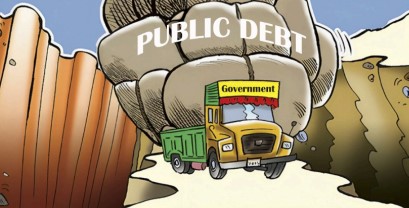
KATHMANDU, October 31: Nepal’s public debt rose by Rs 50 billion in the first three months of the current Fiscal Year (FY), pushing the total burden beyond Rs 2.7 trillion.
According to the Public Debt Management Office (PDMO), the government borrowed an additional Rs 100.84 billion during the review period, of which Rs 90 billion came from domestic sources and Rs 10.72 billion from external lenders.
As of mid-October, the government’s outstanding debt stood at Rs 2.724 trillion, up from Rs 2.674 trillion in mid-July. During the same period, Nepal took new loans worth Rs 100.84 billion and repaid Rs 90.506 billion.
Public debt exceeds Rs 2.434 trillion, increasing by over Rs 30...

The depreciation of the Nepali rupee against the US dollar added further pressure on the treasury, contributing an additional liability of Rs 40.26 billion. The exchange rate climbed up to Rs 142.34 per US dollar from Rs 137.35 during the period.
Domestic borrowing now accounts for Rs 1.278 trillion, or 46.91 percent of the total debt, while external debt amounts to Rs 1.446 trillion, or 53.09 percent.
In the current budget, the government allocated Rs 411.01 billion for public debt servicing—Rs 302.48 billion for principal repayment and Rs 108.03 billion for interest payments. In the first quarter, Rs 109.89 billion was spent on debt servicing including Rs 90 billion in principal and more than Rs 19 billion in interest.
With the increased borrowing, Nepal’s public debt has reached 44.61 percent of its Gross Domestic Product (GDP), up from 43.79 percent at the end of the last FY. A decade ago, in FY 2014/15, the debt-to-GDP ratio stood at 22.28 percent.
The government continues to struggle to mobilize sufficient revenue to meet its obligations, compounded by high allocations for unproductive expenditures.
A Nepal Rastra Bank (NRB) study estimates Nepal’s optimum public debt-to-GDP range at 33 to 35.43 percent. Exceeding this threshold, the central bank warns, could trigger crowding-out effects, raise tax burdens, increase interest costs and place excessive repayment pressure on future generations.